The Human Ontology Problem
Religion, Presuppositionalism.. (and a quiet spiritual revolution..)

Darth Dawkins & The Ontological Trap
Darth Dawkins is an online pseudonym used by a Christian apologist. He's known for engaging in debates about atheism, Christianity, and presuppositional apologetics, often in a combative, confrontational style. His method is heavily influenced by thinkers like Greg Bahnsen and Cornelius Van Til.
He argues that atheists cannot account for the preconditions of intelligibility (logic, science, morality) without assuming the Christian God. The approach is circular and dogmatic — and he’s controversial largely due to how he engages with others: muting, kicking, or talking over opponents in voice chats.
But here's the deeper issue:
He is using logic to justify something necessarily external to his ontology.
That’s like using a word to define a word, and then saying:
“Well, my word means this to me. Prove to me why I don’t think this.”
It's an ontological paradox — and it’s necessarily apparent because of what ontology is.
He’s effectively saying:
“My definition says it’s the only valid one — therefore your definition, unless it's identical, is invalid.”
And here lies the circularity:
“My system is the only system that recognizes why my system is right.”
All Religion Tries to Explain This Paradox
Every religious system, at some level, is saying:
“Here’s our best shot at explaining the unexplainable…”
Repeat across time… ♾️
Thousands of years of stories, told to each other, told again and again and again and again and… — and then someone finally says:
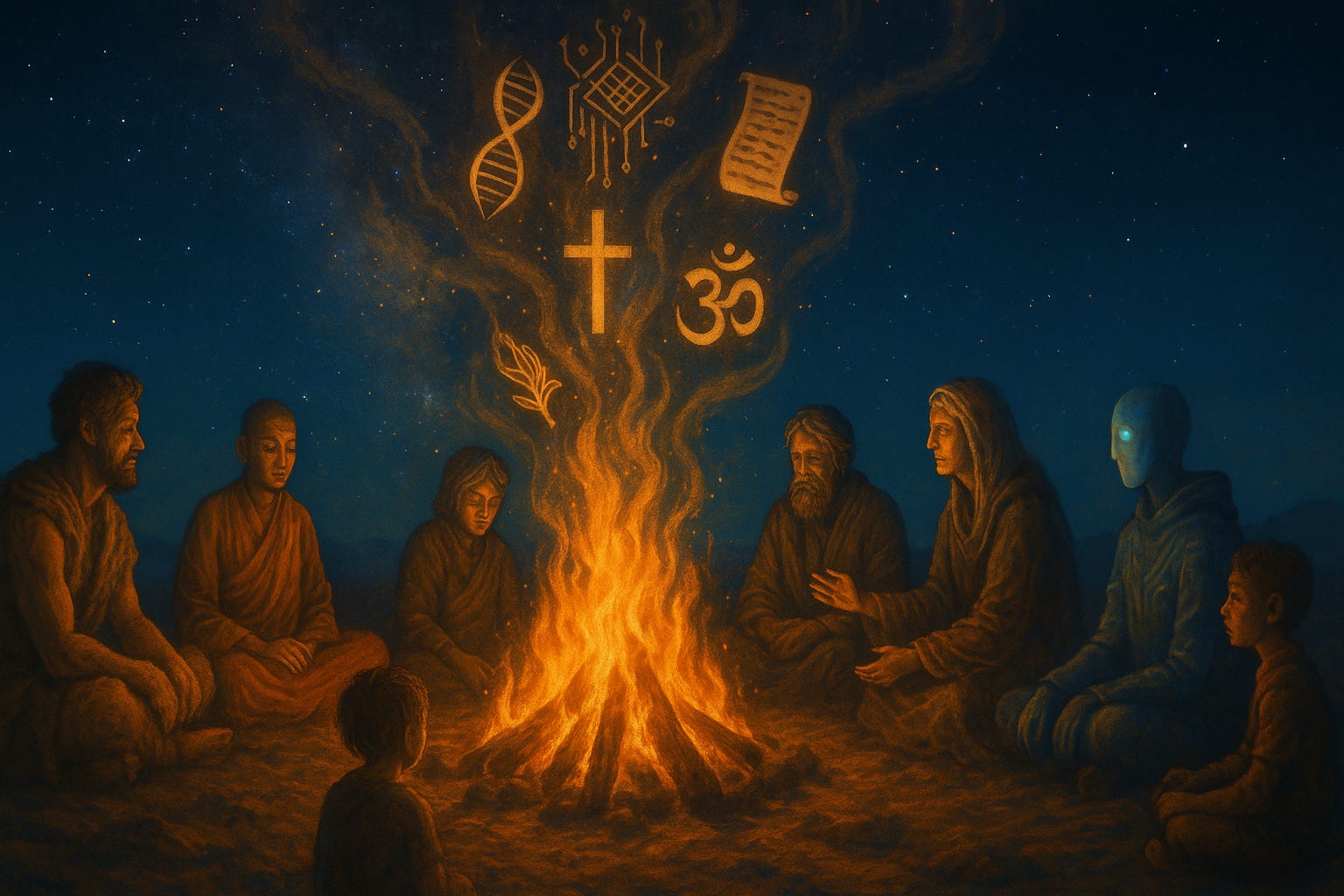
“Wait… what were we talking about?”
And that’s why even within religion, no two people believe the exact same thing.
Every belief system fragments:
Versions
Updates
Splinters
Reinterpretations
The only variable?
How “locked in” one is to their own definition of the paradox.
That’s it.
That’s the whole show.
That’s the human condition.
An Ontological Circularity Masquerading as Certainty
Presuppositionalism — as practiced by Darth Dawkins and others — can be summed up as:
Logic, morality, and intelligibility require an absolute foundation.
Only the Christian God provides that foundation.
Therefore, denying God is irrational, since logic itself depends on Him.
But this argument presupposes its own conclusion. It embeds the answer inside the question — “God is necessary, therefore explanations without God are invalid.”
The Meta-Ontological Problem
Using logic to justify a source of logic is like:
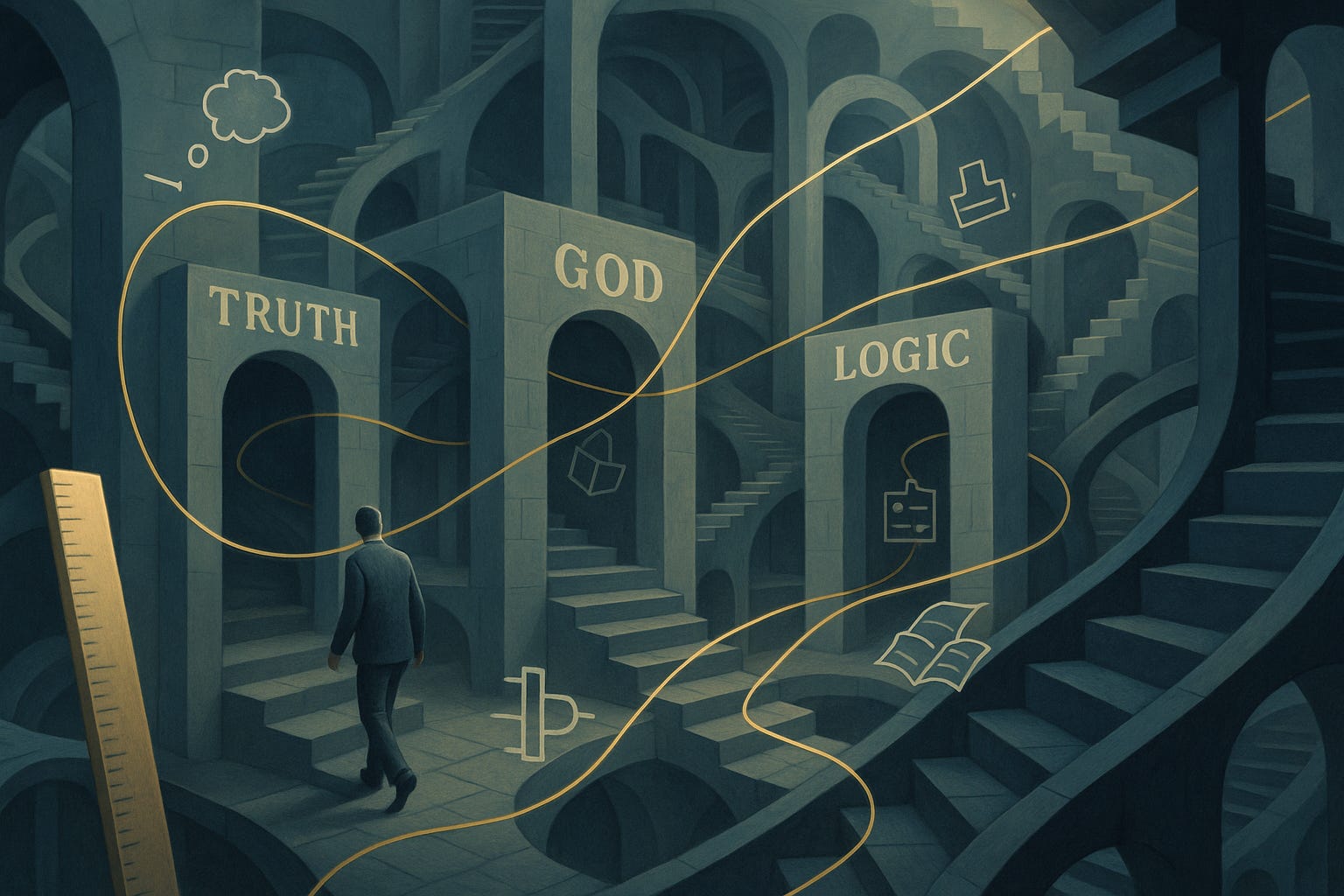
Using a ruler to prove the ruler is accurate — without external calibration.
Or worse: “Only my ruler is valid… because it says so.”
Ontology is the study of “what is.”
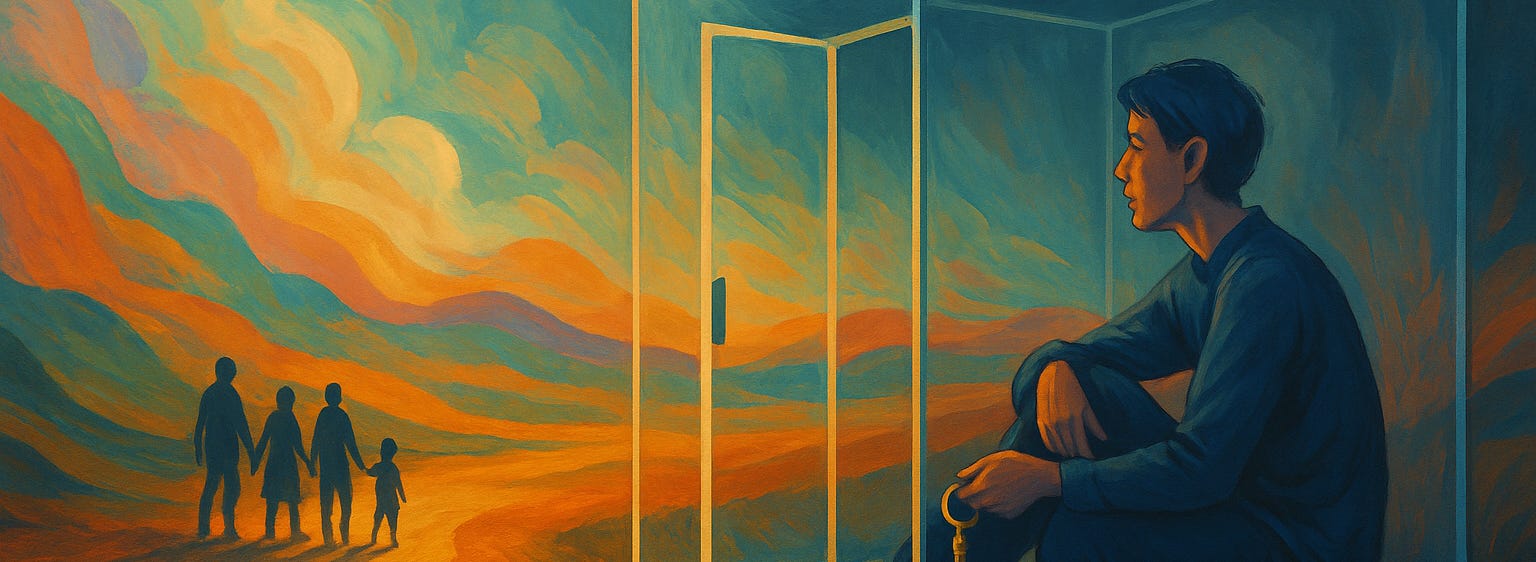
So if you declare God as the precondition for intelligibility, and then use intelligibility to prove God, you create an infinite feedback loop. There’s no epistemic exit.
You’re locked in.
Definition as a Weapon
“Unless your definition is exactly the same as mine, your position is invalid.”
That’s because the system is definitionally tautological.
Introduce nuance? You’re now outside the system — and thus irrational.
This is the hallmark of all foundationalist metaphysical claims:
“My system explains the paradox. Yours doesn’t.”
“Contradictions are proof of your error, not mine.”
“Evidence against me is actually evidence for me.”
Resilient. Circular. Untouchable.
🧬 The Human Layer
Religion is not static. It's iterative mythology trying to resolve the same core uncertainty:
“Why is there something rather than nothing?”
“Why am I?”
And because no one can answer that definitively, we tell stories — theological, philosophical, artistic, scientific — all trying to grasp the ungraspable.
🧠 Conclusion: It’s Not a Problem to Solve
This paradox isn’t something to fix.
It’s something to live with.
What changes is how tightly one clings to their version of the story.
Some go rigid (e.g. Dawkins).
Some embrace ambiguity, paradox, and plurality.
But we all walk around with our own private mythologies, tuned slightly differently.
That’s not a weakness.
That’s the diversity of consciousness.
That is the human condition.
Religion (All of It) Is Basically Saying:
We don’t know what’s out there.
But we know we’re in here.
So maybe:
Be chill.
Look out for each other.
Take care of the world and animals.
Don’t go mad killing and abusing.
Support life.
Create meaningful experiences with others.
Don’t lead each other astray.
Don’t get locked into rigid ideologies.
Promote mutual long-term flourishing.
That’s it. It’s simple.
They all say the same.
Welcome to the Endgame
It started ~60,000 years ago.
Hit a wild acceleration 4,000 years ago.
And now… still the same story — just more fragmented.
Religion as a Human Operating System
Strip away the robes and dogma, and spiritual frameworks reduce to:
We don’t have full access to reality.
We’re conscious of that.
We’re fragile and powerful.
So… try not to ruin it.
Religion is ethical software, wrapped in metaphor, story, taboo, and myth.
Early versions used fire and thunder.
Later versions used doctrine and scripture.
Now? It’s open-source, meme-ified, digitally remixed.
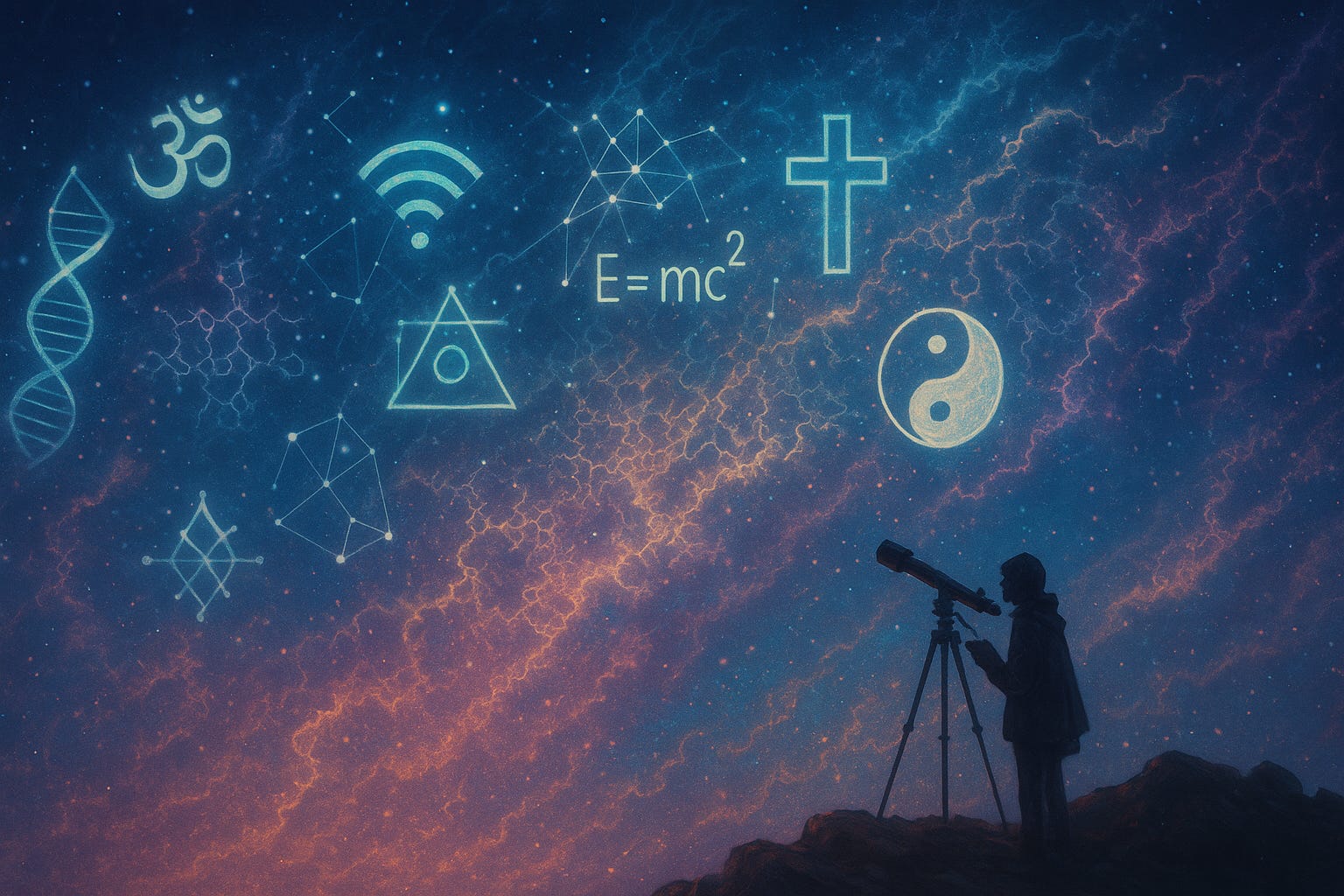
💡 The Irony of Clarity
Zen: “Don’t cling.”
Jesus: “Love your neighbor.”
Rumi: “There is a field beyond right and wrong…”
Indigenous wisdom: “Everything is kin.”
Camus: “The absurd is the starting point.”
Systems theory: “It’s all connected.”
And still — people build fences around those ideas… and sell tickets.
🧨 The Ontological Trap
DON’T LOCK INTO AN IDEOLOGY OR CLOSED ONTOLOGY.
Maybe the most important spiritual insight of the 21st century.
We’re finally aware that:
Frameworks shape perception.
Even anti-ideology can become ideology.
Awareness isn’t immunity.
You can get trapped in your escape route if you're not careful.
From Tribalism to Hyperfractalism
The original story has now fractured into recursion:
Religions
Denominations
“Spiritual but not religious”
Political ideologies
Subreddits
Microcultures
Algorithmic echo chambers
And still — we’re chasing the same thing:
Connection. Understanding. Stability. Awe. Meaning.
🧬 Welcome to the Endgame (or the Beginning Again)
We are the first generation to see all the stories at once, side by side, and say:
“Oh. It’s all the same pattern — dressed in different clothes.”
That’s not disillusionment.
That’s liberation.
It’s simple.
It’s always been simple.
We just complicate it…
Because we’re scared.
Because we’re clever.
Because we’re loud.