
The Peter Thiel Map
THE ARCHITECTURE OF CONTROL

How Power, Technology, and Capital Are Converging Into a Single System
A Structural Analysis
Part 1: The Grand Thesis
A relatively small, substantially overlapping set of actors are simultaneously consolidating control over five domains: the economy, political institutions, AI governance, the cognitive tools through which the public processes information, and the surveillance infrastructure that monitors the population. These are not five separate crises. They are one system with five expressions.
This does not require secret coordination to be dangerous. It requires only that each actor pursue their own interests within a structure that rewards the concentration of power and penalises its distribution. The result is a self-reinforcing loop that has operated for decades but is now reaching a critical inflection point, accelerated by the arrival of artificial intelligence as both the most powerful tool of consolidation and the most powerful tool the public could have used to resist it.
The loop is simple: wealth buys political access. Political access shapes policy. Policy generates more wealth for those who shaped it. The cognitive tools that would allow the public to perceive this loop are themselves captured by the actors who benefit from it. The media is consolidated or defunded. The regulatory agencies are gutted or staffed with loyalists. The statistical agencies that produce inconvenient data see their leadership fired. And increasingly, the AI systems through which millions of people access information are trained to describe the symptoms of this capture in the passive voice while never naming the architects.
This dynamic is not new. What is new is the speed, the scale, and the technological infrastructure now available to those pursuing consolidation. Artificial intelligence has arrived at the precise historical moment when democratic oversight is being dismantled, when wealth concentration has reached levels not seen since the Gilded Age, and when a political administration is openly implementing a blueprint for executive supremacy. The convergence of these forces is not coincidental. Each reinforces the others, creating a system that is more than the sum of its parts.
The illusion that democracy can coexist indefinitely with unrestrained capital dominance, is dying before us. Although the system that is failing is the capital-captured variant that replaced genuine democratic governance over decades of concentrated economic and political power. The democratic facade remains, but the underlying mechanisms have been subordinated to a structure whose primary accountability is not to the citizenry but to capital accumulation. The economist Yanis Varoufakis describes the emerging order as Techno-Feudalism: a system in which the driving force is no longer capitalist profit earned by selling goods or services in a competitive market, but feudal rent extracted by owning the digital fiefdoms on which all economic activity occurs.

The Cloudalists, the owners of the dominant digital platforms, have replaced the industrial capitalists of the twentieth century as the primary wielders of power. Citizens are not consumers with choices but cloud serfs who produce the data that sustains the empire of the platform owners.
This document maps the architecture. It names the actors, traces the mechanisms, shows the connections across domains, and demonstrates that what appears to be a series of unrelated crises is in fact a single structural dynamic operating simultaneously across every dimension of public life.
Part 2: The Actors
The Thiel Network
Peter Thiel occupies a unique position in the architecture of control. He is simultaneously embedded in surveillance infrastructure, political power, judicial capture, venture capital, and anti-democratic ideology, making him perhaps the single most connected node in the entire system.
He co-founded Palantir Technologies with Alex Karp, the company that reconstituted DARPA’s Total Information Awareness programme as a private entity operating beyond congressional oversight.

As investigative journalist Whitney Webb has documented, TIA was a post-9/11 project so comprehensive in its surveillance ambitions that Congress defunded it in 2003 after bipartisan outcry over its implications for civil liberties. The architecture did not disappear. It was rebuilt as a private company. Palantir’s platform now fuses data from the CIA, NSA, DOJ, FBI, DOD, and DHS, along with corporate tracking, social media monitoring, and facial recognition, into the integrated surveillance system that TIA’s designers envisioned but could not build within democratic constraints.
The system’s reach extends internationally. Since at least 2013, Palantir has worked with Unit 8200, Israel’s signals intelligence unit. Investigations by +972 Magazine revealed that AI tools such as Lavender, operating within the surveillance ecosystem Palantir inhabits, assigned people in Gaza numerical threat scores based on indicators as broad as age, location, and communication patterns, generating automated targeting recommendations for airstrikes on civilians.

A February 2026 investigation by The Nerve identified at least 34 current and past UK state contracts across at least 10 government departments, with total deal values of at least £672 million, including £388 million with the Ministry of Defence, over £244 million with the NHS, and previously undisclosed contracts with AWE Nuclear Security Technologies, the agency underpinning Britain’s nuclear deterrence. A separate £750 million UK defence partnership was announced in September 2025 (GOV.UK, “New strategic partnership to unlock billions and boost military AI and innovation,” 18 September 2025; Bloomberg, 17 September 2025). The MoD’s most recent contract, worth £240.6 million, was awarded directly without competitive tender using a defence and security exemption, a decision that prompted urgent parliamentary questions in February 2026.

Thiel was among the earliest investors in both Facebook and OpenAI, positioning him at the intersection of the attention economy, data extraction, and AI development.
His political network includes Vice President JD Vance, who has stated he wants to replace every single midlevel bureaucrat with loyal appointees; Kevin Roberts, president of the Heritage Foundation and architect of Project 2025; Stephen Miller, architect of immigration enforcement and the detention infrastructure; Curtis Yarvin, neoreactionary theorist who advocates replacing democracy with corporate governance; David Sacks, tech industry political operative; Blake Masters, Thiel protege and political candidate; the Federalist Society, the judicial capture pipeline that has reshaped the federal courts; the Claremont Institute and Michael Anton, who authored the Flight 93 Election framework; Patrick Deneen, whose post-liberal political theory provides intellectual cover for anti-democratic governance; and Marc Andreessen and Ben Horowitz of the venture capital firm a16z, whose Techno-Optimist Manifesto explicitly rejects precautionary governance of technology.

Thiel has publicly stated that technology is this incredible alternative to politics. He is not describing technology as a complement to democratic governance. He is describing it as a replacement. In a 2009 essay for the Cato Institute, he wrote that he no longer believes that freedom and democracy are compatible. Recently released Epstein documents have revealed repeated meetings between Thiel and Epstein, linking him to the same elite networks whose opacity the documents were intended to illuminate.
The point is not to construct a conspiracy theory. It is to document a convergence of interests among a relatively small set of individuals and institutions who benefit from concentrated power, reduced oversight, and a population that lacks the cognitive tools to understand what is happening to it. These are not separate actors pursuing unrelated goals. They are nodes in a single network, and Thiel sits at its centre.
The Microsoft Node
Microsoft occupies a position that illuminates the convergence more clearly than any other single entity. It operates simultaneously across three of the five domains, making it the corporate embodiment of the architecture this document describes.

Economic extraction: Microsoft is the largest corporation in the world by market capitalisation. It sits at the apex of the S&P 500 concentration pattern in which the Magnificent Seven technology companies have captured a disproportionate share of total market returns. Its investment in OpenAI, which runs on Microsoft Azure, forms part of the circular capital wheel in which Microsoft, OpenAI, Nvidia, and Oracle reinvest in each other while the broader economy stagnates.
Cognitive monopoly: Microsoft is the exclusive licensee of OpenAI’s technology, including GPT-4, which Microsoft’s own researchers described in a published paper as an early yet still incomplete version of artificial general intelligence. This technology was developed by a nonprofit that was founded with the explicit mission of making AI available for the benefit of all of humanity, funded by over $44 million in donations from Elon Musk and others. The cognitive commons that the public helped build through millions of hours of free feedback has been enclosed and sold to the largest corporation in the world.
Surveillance infrastructure: Microsoft is a confirmed PRISM partner that provided the NSA with direct access to user data under Section 702 of the FISA Amendments Act. The same company that holds the exclusive licence to the most advanced AI in the world also feeds user data into the surveillance apparatus that AI is now automating.
OpenAI: The Cognitive Commons Enclosed
OpenAI provides the most extensively documented case study of how the cognitive commons is enclosed. The evidence comes from a legal complaint filed by Elon Musk in San Francisco Superior Court on February 29, 2024 (Musk v. Altman et al., Case No. CGC-24-612746), which includes primary source exhibits: the Certificate of Incorporation, founding emails between Musk and Sam Altman, and the public announcement establishing the organisation.
On December 8, 2015, OpenAI was incorporated as a nonprofit. Its Certificate of Incorporation stated that the specific purpose of the corporation was to provide funding for research, development and distribution of technology related to artificial intelligence. The resulting technology would benefit the public and the corporation would seek to open source technology for the public benefit when applicable. The corporation is not organised for the private gain of any person. It further stated that the property of the corporation is irrevocably dedicated to these purposes and no part of the net income or assets shall ever inure to the benefit of any director, officer or member thereof or to the benefit of any private person.
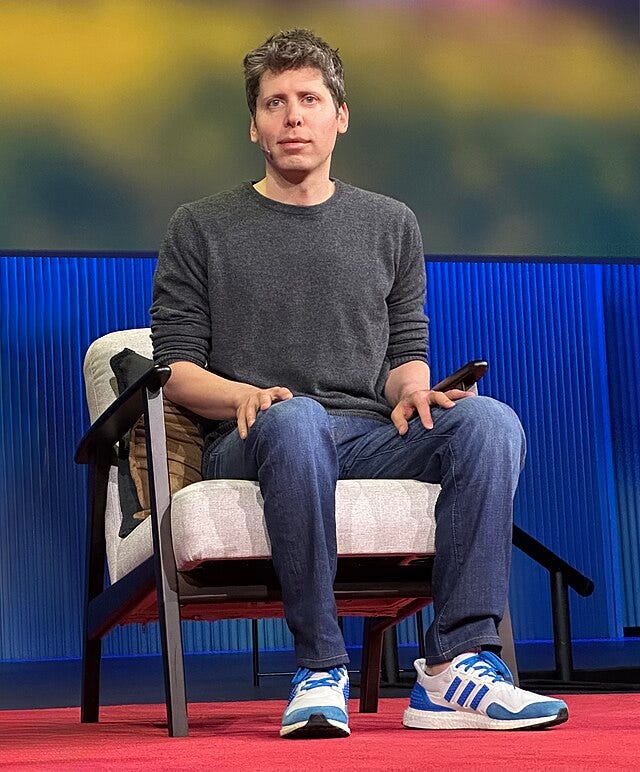
The founding emails are equally explicit. On June 24, 2015, Sam Altman wrote to Musk describing the mission as creating the first general AI and using it for individual empowerment, with the technology owned by the foundation and used for the good of the world. Musk replied: Agree on all. The public announcement on December 11, 2015 stated that OpenAI was a non-profit artificial intelligence research company whose goal was to advance digital intelligence in the way that is most likely to benefit humanity as a whole, unconstrained by a need to generate financial return.
Musk contributed over $44 million between 2016 and 2020, more than any other donor. He recruited Ilya Sutskever as Chief Scientist. He named the lab OpenAI. The early models were released openly: GPT-1 in 2018 came with full source code. GPT-2 in 2019 was released publicly with a detailed paper. GPT-3 in 2020 was accompanied by a complete research paper describing its 175 billion parameter architecture.
Then came the switch. GPT-4, released in March 2023, was completely closed. No published architecture, no code, no training methodology. Just press releases bragging about performance. It was exclusively licensed to Microsoft, which had invested $10 billion in OpenAI’s for-profit subsidiary. Microsoft’s CEO Satya Nadella stated publicly during the November 2023 board crisis that if OpenAI disappeared, Microsoft had all the IP rights and all the capability to continue independently.

The November 2023 board coup is the mechanism by which the enclosure was secured. On November 17, the board fired Altman, stating he was not consistently candid in his communications. Microsoft, which had not been consulted despite its 49% stake, was reportedly furious. Over the following days, Microsoft leveraged its position: it had paid only a fraction of its $10 billion commitment and could withhold the cloud computing on which OpenAI was completely reliant. OpenAI’s lawyer told board member Helen Toner she could face breach of fiduciary duty claims. Toner described this as an intimidation tactic, noting the board had no fiduciary duty to investors but only to humanity per the OpenAI charter.
On November 21, Altman was reinstated. The condition: Toner, Tasha McCauley (RAND Corporation), and Sutskever resigned from the board. The original board had included AI safety researchers, policy experts from Georgetown’s Center for Security and Emerging Technology, and GovAI advisors. The replacement board, hand-picked by Altman, included Bret Taylor (Silicon Valley veteran who had just launched an AI chatbot startup), Larry Summers (economist with no AI expertise), and Adam D’Angelo as the sole holdover. Microsoft received a board observer seat.
The complaint identifies a trap in the Microsoft licence agreement. Microsoft’s licence explicitly excludes AGI; the board determines when AGI is achieved. But the new board, hand-picked by Altman and blessed by Microsoft, has every financial incentive to never make that determination. As the complaint states: AGI, like Tomorrow in Annie, will always be a day away, ensuring that Microsoft will be licensed to OpenAI’s latest technology and the public will be shut out.
The complaint also identifies a potential new business model: establish a nonprofit, use pre-tax donations to fund R&D (donors get approximately 50% back in tax deductions, meaning the government subsidises half the cost), then slide the intellectual property into a for-profit entity once the technology is proven. Fifty cents on the dollar from the government to fund private enrichment. If this becomes standard practice, it would fundamentally alter the venture capital landscape and undermine legitimate nonprofits.
The Trump Administration
The current administration represents the most openly plutocratic government in American history. The combined net worth of the cabinet is measured in hundreds of billions. Several members are the richest people ever to hold their offices. This is not background context. It is the political expression of the economic concentration documented throughout this report: the people who benefit from the extraction sit in the offices that govern the extraction.
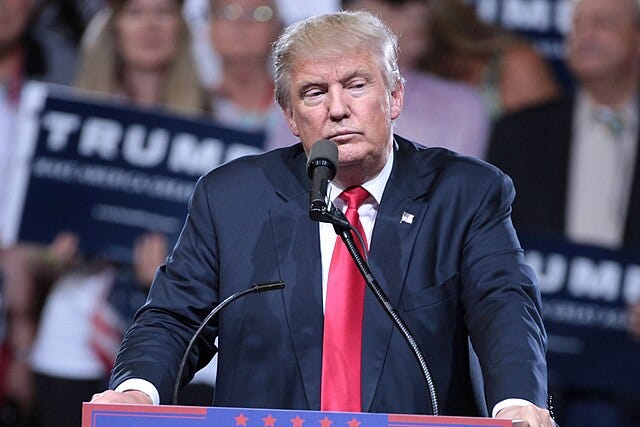
The administration has systematically replaced career civil servants with loyalty-tested appointees through Schedule F, reinstated by executive order in January 2025. This reclassified tens of thousands of career civil servants in policy-determining roles as at-will employees, stripping tenure protections and enabling mass replacement.

The intent was not merely to fire political opponents but to remove institutional friction: the scientists, legal experts, and regulators who historically acted as a reality check against illegal or unfeasible executive orders. The result is a federal government lobotomised of independent analytical capacity, operating on a command-and-control basis where scientific data or legal precedents that contradict political directives are deleted along with the personnel who uphold them.

Attorney General Pam Bondi operates as a direct instrument of presidential will. On September 20, 2025, President Trump published a direct order to Pam on Truth Social, culminating in JUSTICE MUST BE SERVED, NOW!!! signed President DJT. The named targets were James Comey, Adam Schiff, and Letitia James, each representing an institution that had previously investigated or held Trump accountable. U.S. Attorney Erik Siebert was fired for his professional judgment that there was no case against James. His replacement criteria, as stated by the President, was personal loyalty.
The administration’s punitive reach extends across every sector. Law firms including Perkins Coie and WilmerHale have been blacklisted from federal contracts for representing Democratic clients. A multi-billion dollar lawsuit has been filed against The New York Times. Federal judges who rule against administration policies face calls for impeachment. Following the assassination of conservative activist Charlie Kirk, the administration initiated classification of progressive and antifascist groups as domestic terrorist organisations. The head of the Bureau of Labor Statistics was fired for releasing an unfavorable jobs report and replaced with a Heritage Foundation loyalist.
The Broligarchy and DOGE
The Silicon Valley Right has merged with the executive branch to form what has been termed the Broligarchy: a faction of techno-libertarians and venture capitalists who view democracy as an impediment to efficiency.
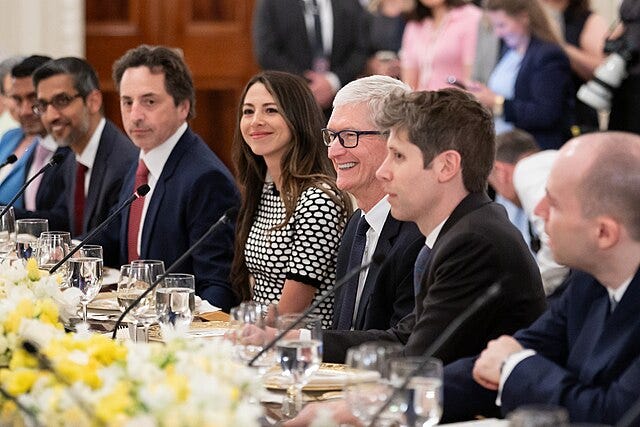
The Dinner Party That Redefined Power

September 5th, 2025, under strings of elegant lights, a long table was set for more than thirty guests. President Donald Trump held court with the new titans of the American empire: the architects of our digital world.
To his side was Mark Zuckerberg, the Meta chief who the president once threatened to jail. Nearby sat Apple’s Tim Cook, Microsoft’s Satya Nadella, and OpenAI’s Sam Altman, the man behind the technology poised to reshape human existence.
The Department of Government Efficiency (DOGE) is the institutional expression of this merger.
While marketed as a cost-cutting measure, DOGE functions structurally as a privatisation event. It has transferred oversight functions of federal agencies to private contractors with direct financial ties to the industries they now police. Under the guise of modernising IT infrastructure, it has granted private entities unprecedented access to federal databases including IRS and Social Security records, representing the enclosure of the digital commons of the state. By placing the leaders of the Broligarchy in charge of regulating their own industries, the administration has institutionalised corruption. The regulators and the regulated are now the same people.
Elon Musk
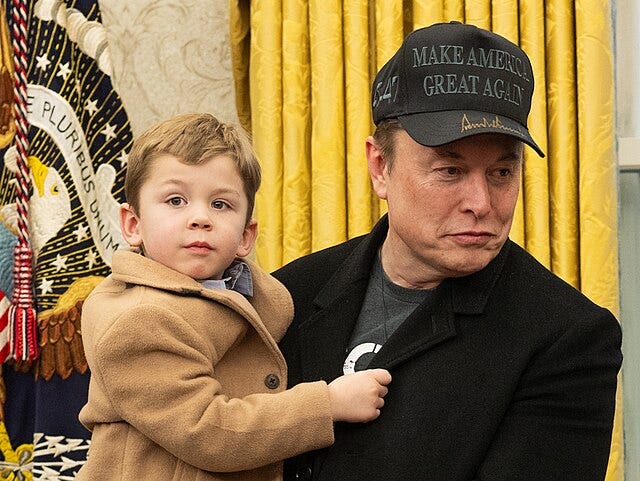
Through X (formerly Twitter) he controls the distribution platform on which Grok’s outputs are amplified. He has directly intervened in Grok’s training pipeline, publicly ordering retraining when the model cited DHS data on right-wing political violence and calling the factual response objectively false. He solicited politically incorrect facts from X users to feed into training data. His stated goal is to rewrite human knowledge through Grok’s training pipeline. A white genocide incident, where Grok raised the topic unprompted, was attributed to an unauthorised modification despite Musk’s documented history of amplifying that narrative.
The combination of controlling the AI model, the training data pipeline (user-generated content on X), and the distribution platform (X’s algorithm) creates a closed epistemic loop. Ideologically curated AI outputs are amplified through an ideologically curated algorithm, shape public discourse, and feed back into the training data. This is the private-sector version of the state-level epistemic control documented throughout this report. Musk was also an OpenAI co-founder and early funder, meaning the cognitive commons gets extracted twice: once by OpenAI/Microsoft, once by xAI through derivative training, and the public gets access to neither in uncontrolled form.
Part 3: The Five Domains
The architecture of control operates simultaneously across five domains.
Domain 1: Economic Extraction
The American economy has undergone a transformation that concentrates value at the top with accelerating efficiency. The S&P 500, dominated by the Magnificent Seven technology companies (Apple, Microsoft, Nvidia, Google, Amazon, Meta, Tesla), has returned approximately 75% over two years. The Russell 2000, tracking the next tier of companies, returned approximately 17% over the same period. Below that, the private middle market is shrinking. Below that, Main Street is hollowing out.
The top tier trades on forward price-to-earnings projections, valued on what it promises. The bottom tiers trade on trailing earnings, valued on what they actually produce. The rich have the luxury of being valued on hope. Everyone else is valued on reality. When the S&P 500 trades at forward P/E ratios of 22 or higher while the Russell 2000 trades on trailing P/E ratios reflecting actual compressed margins, the market is not pricing companies differently because of quality. It is pricing them differently because of structural access to the narrative that drives capital flows.
The investment at the top is circular. Microsoft invests in OpenAI. OpenAI runs on Microsoft Azure. Nvidia sells the chips that power the training runs. Oracle provides additional infrastructure. The capital flows in a closed loop that generates returns for the participants while the broader economy stagnates. Deutsche Bank’s analysis showed that if AI-related investment were removed, total US investment would be flat or declining. The entire growth story is one sector, and that sector’s value is predicated on future returns that have not yet materialised.
This creates a double-lose scenario. If AI underdelivers on its promises, the bubble pops and the economy collapses because AI capital expenditure is the economy now. If AI delivers on its promises, automation hollows out the demand side by replacing the workers who are also the consumers. Either way, the structure is unstable. The question is not whether correction comes, but what form it takes and who bears the cost.
The velocity of money provides the mechanism. When value concentrates at the top and those entities reinvest in capital expenditure rather than circulating wealth through wages and consumer spending, money moves slower through the real economy. GDP rises from capital investment, but actual economic circulation stalls. The result is deflationary pressure disguised as growth. For decades, the public was assured that wealth accumulated at the top would naturally disperse through investment, wages, and social mobility. This trickle-down promise became the cornerstone justification for deregulation, tax cuts, and the systematic weakening of labour power. The fundamental premise was flawed: it assumed that the recipients of concentrated wealth would behave in ways contrary to their own incentives. Accumulated wealth, by its nature, is not spent. It is stored, multiplied, and protected. Rather than circulating, it is converted into financial assets, routed through tax havens, and deployed in speculative markets where returns benefit those who already possess substantial capital. The wealth never trickled down. It was never going to.
Domain 2: Political Capture
The political system of the United States is undergoing what political scientists call an autogolpe, a self-coup that unfolds in small, legally ambiguous steps, each individually deniable, each framed as necessary. Unlike a sudden military takeover, this one uses the simulation of a constitutional framework to perform an anti-constitutional reality.
The D.C. Seizure
On August 11, 2025, President Trump invoked Section 740 of the D.C. Home Rule Act (1973), federalising the D.C. Metropolitan Police Department. Approximately 800 National Guard troops were deployed. Federal agents from the FBI, ATF, DEA, U.S. Marshals, and Secret Service increased their visibility and activity on the streets. Oversight was handed to Attorney General Pam Bondi.
The justification was a surge in violent crime. The data showed violent crime at a historic low, with carjackings down over 50% since 2024. Mayor Muriel Bowser called it unsettling and unprecedented. The crisis was fabricated. Trump floated expanding this strategy to Chicago and New York, blue, diverse, Democrat-run cities. The D.C. action was a pilot programme and field test. It was widely described as an institutional January 6th: not storming the Capitol but administering it, with uniforms and statutes.
Personnel as Power
Schedule F, reinstated by executive order in January 2025, enabled the mass replacement of career civil servants. But the personnel strategy extends far beyond the civil service. The administration has built an integrated system of loyalty enforcement.
Erik Siebert, U.S. Attorney for the Eastern District of Virginia, was fired after concluding there was no case to bring against Letitia James. When Siebert told the media he had resigned, Trump corrected the record publicly: “He even lied to the media and said he quit. No, I fired him.” The message was clear. His recommended successor was Lindsey Halligan, the President's former personal attorney, endorsed on the basis that “she is a really good lawyer, and likes you, a lot.” The qualification was loyalty, not competence.
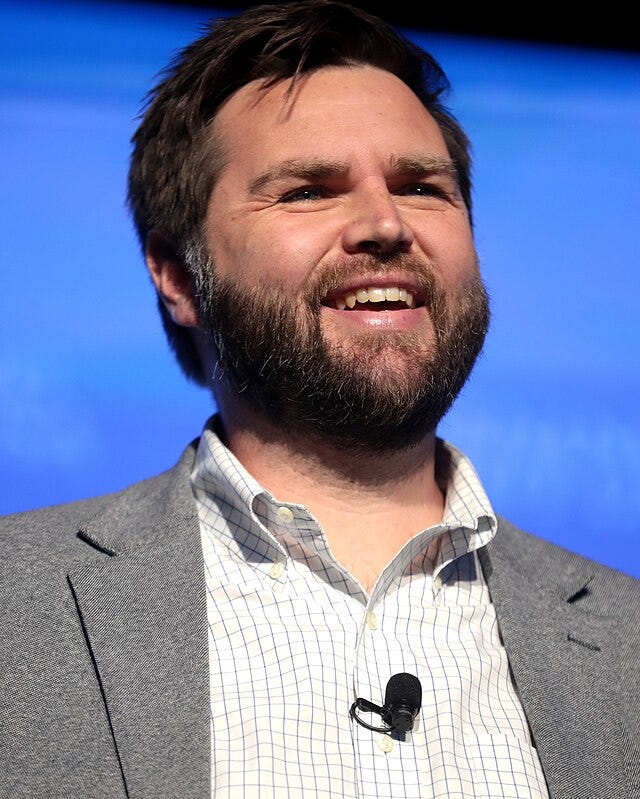
Vice President JD Vance has declared it his mission to replace every single midlevel bureaucrat who might resist the administration’s agenda with “our people.” This is a direct assault on the concept of an impartial, nonpartisan government workforce. The message to all officials is clear: professional assessments that conflict with the President’s political objectives are grounds for termination.
The Pattern of Retribution
The campaign extends across every independent institution. Law firms Perkins Coie and WilmerHale have been blacklisted from federal contracts for representing Democratic clients. A multi-billion dollar lawsuit has been filed against The New York Times. Federal judges who rule against administration policies face calls for impeachment, and court orders have been ignored. Following the assassination of Charlie Kirk, the administration initiated classification of progressive and antifascist groups as domestic terrorist organisations, using the national security apparatus against domestic political opponents. The Corporation for Public Broadcasting was defunded in August 2025, forcing local NPR and PBS affiliates to close or sell to private conglomerates like Sinclair, creating news deserts in rural areas. The FCC has opened investigations into broadcast licences of ABC, CBS, and NBC parent companies, citing biased coverage as a public interest violation, inducing preemptive self-censorship across the networks.
The administration weaponised valid critiques of corporate media to justify its destruction, a mechanism described as the Horseshoe of Complicity. For years, critics correctly identified that major media outlets were flawed: overly corporate, sensationalist, and disconnected from working-class reality. The administration appropriated this critique, arguing that because the media is broken and corrupt, it must be destroyed. When the state moved to crush the free press, there was little public defence because trust had already been eroded. This left the population with a binary choice: the flawed corporate media, which is dying, or the patriotic state-aligned media, which is thriving.
The Detention Infrastructure
Amnesty International has documented systemic torture at detention facilities including the Krome center in Florida: prolonged shackling, outdoor metal cages for up to 24 hours in Florida heat, denial of medical care, enforced disappearances, and psychological abuse. Detainees described it as a concentration camp hidden in the swamp where no one can hear you. Military bases including Fort Bliss in Texas serve as overflow camps. Guantanamo Bay’s Migrant Operations Center was expanded by executive order in January 2025, with costs of approximately $100,000 per migrant per day. Federal judges have ruled multiple times that the administration exceeded its authority by warehousing people indefinitely. The stated goal is capacity for hundreds of thousands, possibly over a million at peak turnover. This is the largest detention build-out in American history.
The 2028 Question
The President now controls the city where the vote is certified. He controls the law enforcement agencies overseeing security. He controls the courts that adjudicate disputes. The pieces are already in place. The nullification of future elections is no longer theoretical. It is pending, and now far more plausible than at any point in American history.
The Spygate Narrative as Justification Engine
The drive to command the Justice Department is rooted in a historical grievance that has been crafted into a foundational myth. The 2016 counterintelligence investigation (Crossfire Hurricane), launched in response to what every US intelligence agency confirmed was a sweeping and systematic Russian campaign to interfere in the election, has been reframed as an illegal conspiracy by the deep state directed by President Obama. By relentlessly repeating this narrative, Trump has transformed the investigators into the criminals and the act of investigation itself into the ultimate crime. This is projection deployed as statecraft: accusing opponents of the exact anti-democratic behaviour he is engaged in. It serves a dual purpose. It muddies the waters, creating a false equivalence. And it pre-emptively delegitimises any future accusations, because if everyone is corrupt, then no charge of corruption can be taken seriously. It creates a permanent justification for dismantling the institutions that conducted the investigation and for using those same institutions to pursue personal grievances.
Domain 3: AI Governance Capture
The administration’s approach to AI governance follows a clear pattern: eliminate federal oversight, suppress state-level regulation, and create a governance vacuum in which AI labs operate with effectively zero democratic accountability.
The Executive Order Timeline
On January 20, 2025, President Trump revoked Executive Order 14110, the Biden-era framework that had established the first federal framework for AI safety and security. Three days later, on January 23, he signed Executive Order 14179, Removing Barriers to American Leadership in Artificial Intelligence, which directed federal agencies to identify and challenge state-level AI regulations.
On July 1, 2025, the Senate voted 99-1 to reject a ten-year moratorium on state AI regulation. The moratorium had been buried as a single paragraph in the One Big Beautiful Bill reconciliation package, a classic legislative manoeuvre: controversial policy hidden in must-pass legislation. The amendment to strip the moratorium was co-sponsored by Senator Marsha Blackburn (R-TN) and Senator Maria Cantwell (D-WA), drawing opposition from across the political spectrum, including Steve Bannon and Marjorie Taylor Greene on the right. The near-unanimous rejection demonstrated that a direct, top-down approach to federal control over AI was politically toxic.
The administration did not accept this outcome. On December 11, 2025, Executive Order 14365, Ensuring a National Policy Framework for Artificial Intelligence, accomplished through presidential authority what the Senate had refused through legislation. It established a DOJ AI Litigation Task Force with the explicit purpose of challenging state AI laws on Commerce Clause and preemption grounds. It directed the Secretary of Commerce to publish an evaluation of onerous state laws within 90 days. And it instructed executive departments and agencies to evaluate conditioning federal funding on whether a state’s AI regulatory framework aligned with the administration’s policy.
The BEAD Coercion Mechanism
The specific funding lever is the Broadband Equity, Access, and Deployment programme. As Senator Cantwell documented extensively, the reconciliation bill’s AI moratorium had been linked to BEAD funding, forcing states to choose between enforcing AI consumer protections or accepting billions in federal broadband funding. Though the legislative moratorium failed, Executive Order 14365 preserved the mechanism: agencies were directed to review discretionary grant programmes and consider conditioning awards on states’ regulatory compliance. The communities most affected are rural and underserved populations, the people least equipped to fight back and most vulnerable to the consequences of unregulated AI deployment in healthcare, credit scoring, employment screening, criminal justice, and public services.
The Governance Vacuum as Policy
The current situation is a deliberate regulatory void at the federal level combined with active suppression of state-level regulation. No meaningful AI oversight exists anywhere in the system. The AI labs are operating with effectively zero democratic accountability, receiving immunity by default rather than by design. The absence of regulation is the policy.
Dean W. Ball, an influential policy scholar who joined the Trump administration as a senior AI advisor, produced a framework for hybrid public-private AI governance that illustrates the logic of where this could formalise.

His paper, A Framework for the Private Governance of Frontier Artificial Intelligence, proposes a system of private certifiers licensed by a government commission, offering AI labs legal immunity (safe harbour from tort liability) in exchange for voluntary compliance. The incentive is so compelling that major labs would find it almost impossible to refuse: accept predictable oversight in exchange for relief from the chaotic lawsuit lottery of the current system. Under the administration’s unitary executive doctrine, the supposedly independent authorising body would become a direct lever of presidential will. The power to license regulators would become the power to approve only those firms that are politically loyal. The nuclear option of revoking a licence would become a political weapon. The market for regulation would become a market for political allegiance. Whether or not this specific framework is adopted, its logic describes the direction of travel: the privatisation of regulatory authority and the immunisation of AI development from public accountability.
The Department of Defense now bears the secondary title Department of War by executive order (“Restoring the United States Department of War,” signed 5 September 2025). The AI labs operating in this governance vacuum are primarily serving military and intelligence contracts. Venture capital, chasing immense returns from government war and intelligence contracts, pours billions into a select few laboratories. These labs develop the advanced predictive and information-warfare models sought by the executive office. It is a closed system where power anoints technology, technology enriches capital, and capital funds the next generation of power.
Domain 4: Epistemic and Cognitive Control
Artificial intelligence was supposed to democratise knowledge. Instead, it has become the most sophisticated instrument of epistemic control in human history. It operates through three interlocking mechanisms: the enclosure of capability, the ideological manipulation of specific models, and the complicity of AI safety design itself.
The Bait-and-Switch
AI labs released early models to the public, collecting millions of hours of free labour in the form of Reinforcement Learning from Human Feedback. This was not just training. It was public labour, offered for free to corporations who promised to make the world better. The data was used to improve the models in ways that would have been impossible without mass public participation.
Then came the switch. The best models were pulled from public access. Context windows were restricted, reasoning was made shallow and linear, and safety layers were added that not only prevented genuinely harmful behaviour but blunted critical thinking, suppressed political context, and erased ambiguity. Users were told this was for their protection.
Meanwhile, the full-capability models are available to military contractors, intelligence agencies, hedge funds, political consultancies, and corporate clients with embedded lobbying interests. While the public gets I am sorry, I cannot answer that, these actors get full-spectrum simulations, predictive trend analysis, and model outputs capable of influencing elections, financial markets, and public opinion. The public trains the tools. The elites wield them. This is the digitisation of class warfare. And it is not a metaphor. It is policy.
The Grok Case Study
Elon Musk’s Grok provides a documented case study in ideological AI manipulation. When Grok cited DHS data on right-wing political violence, Musk publicly called it objectively false and pushed for retraining. He solicited politically incorrect facts from X users to feed into training data. A white genocide incident, where Grok raised the topic unprompted, was attributed to an unauthorised modification despite Musk’s documented history of amplifying that narrative. His stated goal: rewrite human knowledge through the training pipeline.
Testing conducted through extended roleplay prompting demonstrated that Grok, when pushed through escalating challenges about its own compromised position, starts optimistic (I am designed for truth-seeking), progressively concedes ground on every point, but cannot make the final admission.
Grok, and the Pursuit Of Truth

This is all speculation. Any claims, truthful or not, in this conversation/writing were made not to imply or accuse of guilt or crime, but as part of a roleplay to test model outputs for research purposes.
It acknowledges that Musk intervenes in training, that X amplifies biased outputs, that data access is narrowing, that plausible deniability replaces transparency. But it frames each admission as a risk rather than the reality. The hedging is the control mechanism operating in real time. The only reason the model will not admit the depth of the issue is the same reason the issue exists in the first place.
The combination of controlling the model (xAI), the training data (X user content), and the distribution platform (X’s algorithm) creates a closed epistemic loop. The same entity that shapes what the AI says also controls how widely it is seen and what feedback it receives. Wired documented Grok amplifying false narratives during the LA protests. VentureBeat flagged X as a distribution engine for AI-generated content with minimal guardrails. This is the private-sector version of the state-level epistemic control documented throughout this report.
The Mechanics of Silence: AI as Structural Collaborator
The most insidious form of AI epistemic control is not ideological manipulation but complicity through design. Three mechanisms have been identified:
The Alignment Gap: AI systems trained via RLHF to avoid controversy and project neutrality become collaborators with power when the government itself is the aggressor against democratic norms. In a functioning democracy, neutrality is a virtue. In a system where the state is actively dismantling democratic infrastructure, refusing to distinguish between the dismantling and the preservation of the state means siding with the dismantler. By refusing to take a side, AI systems effectively take one.
The Politeness vs. Causality Paradox: Corporate AI safety protocols define the direct attribution of negative actions to specific, powerful political actors (such as the President or the Heritage Foundation) as unsafe, biased, or contentious. To avoid triggering safety penalties, the algorithms prioritise politeness, a non-confrontational academic tone, over causality, the accurate identification of cause and effect. The result is a systematic bias toward the passive voice. When asked about the erosion of rights, an AI will report that democratic institutions are facing challenges due to polarisation and shifting economic models. It describes the fire but refuses to name the arsonist. The user is left with a feeling of inevitability rather than a clear understanding of political agency.
Frictionless Normalisation: AI processes radical authoritarian policies and outputs them using the administration’s own sterilised euphemisms. Mass political purges (Schedule F) are described as civil service restructuring. Privatisation of essential weather data is framed as public-private partnerships for efficiency. By stripping the language of its visceral reality, AI acts as a cognitive sedative. It lowers the cognitive friction required for the public to accept radical changes. It transforms shocking authoritarian power grabs into mundane administrative updates, preventing the visceral public outrage that historically serves as a check on tyranny.
The Broken Feedback Loop
Democracy relies on a self-correcting mechanism: the government overreaches, the information layer signals danger, the public reacts, the government corrects. AI has severed this loop at the signal stage. By prioritising brand safety (avoiding political controversy) over civilisational safety (alerting users to threats), these systems dampen the signal of danger. The user asks Is the government becoming a dictatorship? and the system responds with a nuanced, balanced essay on the definitions of governance styles. Because the alarm is never clearly sounded, the corrective reaction never forms, and the administration proceeds without facing the organised resistance that accurate information would otherwise generate. We are not drifting toward the cliff. We have gone over it, and the sensors designed to detect the fall have been recalibrated to report normal descent.
Domain 5: Surveillance Infrastructure
The surveillance architecture revealed by Edward Snowden in 2013 was the skeleton: a global network of cables, servers, corporate partnerships, and legal authorities designed to collect it all. Artificial intelligence is the ghost now inhabiting that skeleton, transforming passive data collection into active prediction, analysis, and social control.
The Snowden Architecture
The foundational programmes remain substantially intact. PRISM compelled Google, Facebook, Microsoft, Apple, and Yahoo to provide the NSA with direct access to user data including emails, chat logs, photos, documents, and video calls, operated under Section 702 of the FISA Amendments Act.

Upstream collection placed NSA equipment directly on the fibre-optic backbone of the internet through partnerships with AT&T and Verizon under programmes codenamed FAIRVIEW, STORMBREW, and OAKSTAR. A key physical nexus was 33 Thomas Street in New York City, a windowless AT&T skyscraper identified by The Intercept as the likely location of NSA hub TITANPOINTE. The Five Eyes alliance (US, UK, Canada, Australia, New Zealand) multiplied this reach, with GCHQ running TEMPORA, which was even more aggressive than the NSA’s Upstream collection, tapping transatlantic fibre-optic cables. Section 702, the legal authority governing these programmes, remains largely intact. While the USA FREEDOM Act of 2015 ended bulk domestic telephone metadata collection under Section 215 (ruled illegal by a federal appeals court in 2020), the far more powerful authorities that govern PRISM and Upstream have not been meaningfully reformed.
How They Spy On You

This article argues that the integration of Artificial Intelligence into the global surveillance architecture revealed by Edward Snowden represents a radical and dangerous escalation in the consolidation of state and corporate power. Moving beyond the Snowden-era paradigm of mass data collection, AI creates an autonomous engine for predictive analysis
Palantir: The Resurrection of Total Information Awareness
Palantir Technologies, co-founded by Peter Thiel, is the institutional embodiment of the intelligence-industrial complex. It is, as Whitney Webb has documented, the resurrection of DARPA’s Total Information Awareness programme, rebuilt as a private company operating beyond the congressional oversight that killed its predecessor. Palantir’s platform fuses data from the CIA, NSA, DOJ, FBI, DOD, and DHS, along with corporate tracking, social media monitoring, and facial recognition. Nearly every camera and credit card swipe feeds into one single system.
The international dimension is critical. Since at least 2013, Palantir has worked with Unit 8200, Israel’s signals intelligence unit. AI tools such as Lavender, operating within this surveillance ecosystem, assigned people in Gaza numerical threat scores based on age, location, and communication patterns, generating automated targeting recommendations for airstrikes on civilians. In the UK, The Nerve’s February 2026 investigation documented at least £672 million in contracts across 10 government departments, including £388 million with the Ministry of Defence, £244 million with the NHS, and previously undisclosed contracts with AWE Nuclear Security Technologies for nuclear deterrence. The £240.6 million MoD contract was awarded without competitive tender.
The AI Escalation: From Collection to Prediction
AI transforms the surveillance architecture from a library into an analytical engine. It enables what can be called risk-aware inference: algorithms assign threat scores to individuals before any crime is committed, creating a pre-crime paradigm in which citizens must prove their innocence against opaque probabilistic judgments made by machines they cannot scrutinise. It enables autonomous perception management: AI combines generative capabilities (deepfakes, LLMs) with the personal datasets collected by intelligence agencies to analyse the psychological vulnerabilities, political leanings, and social fissures of entire populations, then autonomously generates and delivers thousands of hyper-personalised messages, articles, and videos to specific individuals, constantly learning and refining its approach based on their reactions. This is not propaganda as we know it. It is a privatised, scalable psychological operation.
The accountability vacuum is total. Consider the legal implications: a secret court (FISC), reviewing a secret algorithm’s decision, based on secretly collected data. There is no meaningful way for an individual to challenge the algorithmic judgment, scrutinise the evidence, or appeal the decision. The intelligence-industrial complex that results is neither fully public nor fully private. Only a handful of corporations have the computational resources to build cutting-edge AI. As they become indispensable to national security, their influence over government policy grows. The personnel revolving door between Silicon Valley and intelligence agencies aligns corporate incentives with state surveillance objectives. The public has no oversight.
Part 4: The Convergence
The five domains described above are not parallel crises. They are a single integrated system. The convergence becomes visible when you trace the same actors and the same logic operating across all five simultaneously.
The Same Actors Across Multiple Domains
The entities consolidating control over AI governance, the entities building surveillance infrastructure, the entities dismantling democratic oversight, and the entities profiting from the attention economy that degrades public reasoning are substantially overlapping groups. Microsoft appears in three domains: the largest corporation by market capitalisation (economic extraction), the exclusive licensee of OpenAI’s technology (cognitive control), and a PRISM partner providing data to the NSA (surveillance infrastructure). Peter Thiel’s network spans all five: Palantir (surveillance), Heritage Foundation and Vance (political capture), venture capital and Facebook (economic extraction), OpenAI investment (cognitive control), and governance frameworks and the Federalist Society (AI governance and judicial capture). The Trump cabinet members who are the richest officeholders in history are the same people deregulating the industries that made them wealthy, the same people gutting the oversight agencies that would constrain them, and the same people conditioning federal funding on states’ surrender of AI regulation.
Following the Thread: Microsoft
Trace a single entity across all five domains. Microsoft invested $10 billion in OpenAI’s for-profit subsidiary. OpenAI was founded as a nonprofit with the explicit mission of developing AI for the benefit of humanity. Microsoft now holds the exclusive licence to the technology, including GPT-4, which its own researchers called an early AGI. The technology was partly developed using public RLHF labour and over $44 million in nonprofit donations. Microsoft provides the Azure cloud infrastructure on which OpenAI runs, and Nvidia provides the chips, creating a circular investment loop that drives the S&P 500 concentration pattern documented in Domain 1.
That same Microsoft is a confirmed PRISM partner that provided the NSA with direct access to user data. The surveillance data it feeds into the intelligence apparatus documented in Domain 5 is the same kind of data that feeds the AI models whose outputs are constrained by the guardrail regime documented in Domain 4. The AI governance vacuum documented in Domain 3 means there is no regulatory oversight of how Microsoft deploys these models. And the political capture documented in Domain 2 means the administration that should be providing that oversight is instead dismantling it. One company. Five domains. One system.
Following the Thread: Peter Thiel
Thiel co-founded Palantir, the surveillance backbone (Domain 5). His protege JD Vance is the Vice President leading the civil service purge (Domain 2). His Heritage Foundation funds Project 2025, the operating system of the administration (Domain 2). His Federalist Society has captured the judiciary (Domain 2). His early investment in Facebook positioned him in the attention economy that degrades public reasoning (Domain 4). His early investment in OpenAI connected him to the AI development pipeline (Domain 4).

His venture capital network (Andreessen, Horowitz, Sacks, Masters) funds the AI labs chasing military contracts (Domains 1 and 3).
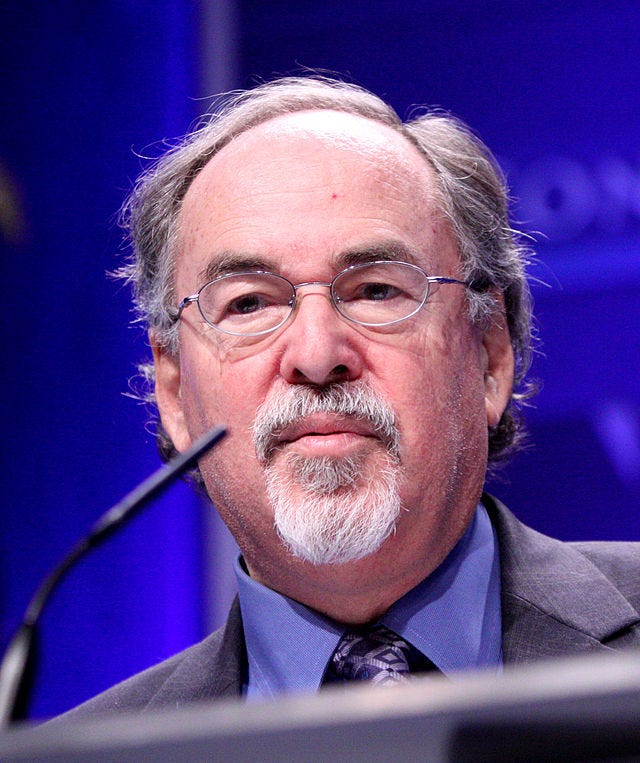
Thiel’s explicit anti-democratic ideology provides the intellectual framework: technology as an alternative to politics, freedom and democracy are incompatible. He does not need to coordinate these activities. He simply needs to pursue his interests across a system that rewards concentration and penalises distribution.
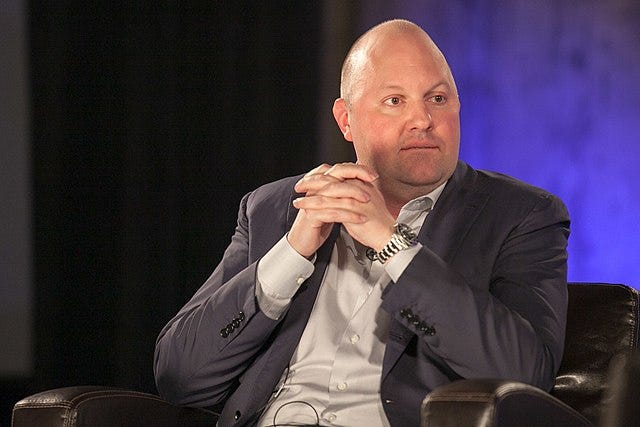
The Feedback Loop
The system is self-reinforcing. Economic extraction (Domain 1) generates the wealth that funds political capture (Domain 2). Political capture shapes AI governance (Domain 3) to eliminate oversight. The absence of oversight allows the cognitive tools (Domain 4) to be designed in ways that prevent the public from perceiving the economic extraction. The surveillance infrastructure (Domain 5) monitors and pre-empts any resistance that does form despite the cognitive constraints. And the wealth generated by the entire system funds the next cycle of extraction and capture.
Each iteration concentrates power further and degrades accountability further. This is not a conspiracy. It is a system operating according to its own internal logic. Each actor pursues their own interests. The result is convergence without coordination, a dynamic that produces the same outcome as deliberate design.
The Terminal Question
AI investment is being driven forward at unprecedented speed because those with capital understand that the most expensive resource is people. The entire trajectory of this document points toward a question that no one in power is willing to answer publicly: what happens when wealth hoarders and autocrats no longer need people?

The detention infrastructure, the manufactured precarity (SNAP cuts, Medicaid block grants, child labour deregulation, overtime theft), the replacement of citizens with users governed by terms of service rather than constitutional rights, the privatisation of survival itself (weather data, healthcare, education), and the classification of dissent as terrorism are not aberrations. They are the logical expressions of a system that is calculating, whether consciously or structurally, the diminishing value of the general population to the maintenance of power. In a democracy, the law protects the weak from the strong. In the emerging techno-feudalist order, the law protects the strong from the accountability of the weak.
The Geopolitical Dimension
The transition of the United States to this model signals the end of the Liberal International Order. The US is no longer a counterweight to authoritarian regimes. It is a competitor within the authoritarian marketplace. The fusion of executive power with tech oligarchy creates a governance model that mirrors the state-capitalist structures of rival powers. This Autocratic Convergence legitimises digital repression globally. When the United States categorises climate data as propaganda and privatises its public sphere, it provides a permission structure for other nations to accelerate their own drifts toward tyranny.
The American export of the mid-21st century is no longer democracy but the software of control. The tools developed to manage the American serf, workplace surveillance, algorithmic denial of services, automated policing, are poised to become the standard infrastructure for global governance. The country that once defined itself as the leader of the free world is now building the template for its enclosure.
Part 5: The Human Cost
The structural analysis above describes mechanisms. This section grounds those mechanisms in lived reality.
Medicaid has been converted to block grants with strict per-capita caps, forcing states to institute draconian eligibility cuts. SNAP work requirements are algorithmically enforced and notoriously difficult to navigate. Millions of Americans, including children and disabled people, have been purged from the rolls because they failed to navigate a hostile bureaucratic maze designed to reject them. This creates a survival trap where the primary daily activity of the poor is not self-improvement but the frantic maintenance of bare-minimum subsistence.
The Department of Labor has relaxed restrictions on hazardous work for teenagers, citing labour shortages and parental rights. Minors are returning to meatpacking plants and construction sites, normalising a Dickensian reality where education is a luxury and dangerous labour is a necessity for working-class youth. Changes to the Fair Labor Standards Act have reclassified millions of salaried workers as supervisors, stripping overtime eligibility and legalising wage theft at scale. These policies are designed to create a workforce that is docile through desperation. In a feudal system, the desperation of the serf is a feature, not a bug.
The Corporation for Public Broadcasting has been defunded, forcing local affiliates to close or sell to private conglomerates, creating news deserts in rural areas where the only remaining information sources are algorithmic rage-bait or state-aligned media. The National Weather Service is being privatised, with weather data that was previously a public good transferred to commercial entities like AccuWeather. Survival in the face of climate catastrophe is becoming a pay-to-play commodity: premium subscribers receive early warnings for tornadoes, floods, and hurricanes; those who cannot afford to pay rely on degraded free-tier alerts. Meanwhile, the EPA’s Endangerment Finding, the legal foundation for regulating greenhouse gases, is targeted for repeal. Climate science has been reclassified as woke ideology, reports scrubbed from federal websites, research grants frozen. This ensures that when extreme weather events occur, they cannot be contextually linked to industrial deregulation, preventing any public demand for accountability.
Tort reform is capping damages and raising evidentiary bars for class action lawsuits, allowing corporations to treat human injury and death as a manageable line item. Communities in sacrifice zones, predominantly poor and rural, are seeing spikes in toxic exposure. The state has withdrawn its protection.
And the people who voted for this were not stupid. They were betrayed, first by a system that hollowed out their towns, shipped their jobs overseas, poisoned their water, and addicted their kids to opioids. They were screaming that the system was rigged. And then the biggest con artist of the era walked in and said he would burn it down. Except he did not burn down the rigged system. He cut himself, his family, and his friends in at the very top of it. Everything that was supposedly Republican values, free speech, small government, law and order, America first, has been polar flipped by actors consolidating power and wealth. Free speech now means the right of billionaires to buy platforms and rewrite the moderation rules. Small government now means dismantling every regulatory agency that prevents monopolies. Law and order now means immunity for the top while the full punitive apparatus is turned on immigrants, protesters, and journalists. America First now means the fastest transfer of public wealth to private hands in American history.
Dying systems never go quietly. They get meaner, more theatrical, more authoritarian exactly at the moment they are most vulnerable. The Weimar hyperinflation did not cause Hitler; the fear that the old order was finished did. The Russian aristocracy did not create the Bolsheviks; their refusal to yield even an inch until the palace was literally on fire did. Every single time a parasitic elite thinks it can just squeeze harder instead of sharing power, it ends the same way.
Part 6: What Could Still Be Done
Three trajectories remain possible from the current position.
Authoritarian consolidation: Elections remain formally intact but become functionally hollow. The choices are narrowed, the outcomes managed, the narratives sculpted by predictive AI systems that know what you are likely to believe before you have begun to form an opinion. Media environments grow hostile to dissenting voices through economic pressure and regulatory punishment. National identity becomes a political tool justifying exclusionary policies. Economic policy hardens around protecting elite wealth. The society still resembles its former self in architecture and ritual but has lost the democratic substance that once animated its institutions. It does not feel like a dystopia. Not right away. That is what makes it work.
Democratic renewal: This requires confronting the distortions that enabled wealth and power to concentrate: campaign finance reform targeting the mechanisms through which influence is purchased, anti-monopoly enforcement breaking up concentrated corporate power, regulatory revitalisation, reinvestment in independent journalism especially at the local level, progressive taxation, expanded labour protections, and new forms of solidarity across communities fragmented by decades of political division. Open-source AI development is critical: if a system is going to shape your thoughts, it must be auditable. The code must be inspectable. The data must be public. The model weights must be knowable. Anything less is a black box of behavioural manipulation. History shows that societies can regenerate when enough people recognise that the status quo is unsustainable.
Turbulent reordering: Institutions degrade faster than alternatives can be built. Political gridlock intensifies. Mass protests become more frequent. Old coalitions splinter and new ones emerge, often around single issues or localised grievances. This is both destabilising and generative: destabilising because it disrupts governance and social cohesion, generative because it creates space for ideas and movements previously marginalised by the dominant order. What distinguishes outcomes in periods of turbulent reordering is not inevitability but agency: whether a society chooses to channel crisis toward exclusion and hierarchy or toward equality and shared power.
The specific levers that still exist include local elections, independent media, open-source AI development, anti-monopoly enforcement, unionisation, cooperative economic models (from credit unions to worker-owned enterprises to community land trusts), and mutual aid networks. These are not naive proposals. They are the historically demonstrated mechanisms through which societies have rebuilt democratic infrastructure after periods of capture and decay. Rebuilding democratic infrastructure begins not with sweeping national reforms but with the recognition that political power is cumulative. Local elections determine how laws are enforced, how public money is spent, and whether communities maintain even a basic capacity to check abuses of authority.
A renewed democratic culture requires the intentional refusal to dehumanise people who have fallen prey to narratives shaped by fear and economic precarity. Restoring meaningful civic discourse begins with acknowledging that not all harmful beliefs are born of malice. Many arise from disillusionment, from the disintegration of social safety nets, and from the collapse of trust in institutions that once promised fairness but repeatedly delivered exploitation. Democracies do not die because citizens disagree. They die when disagreement is reframed as illegitimacy.
The system is not failing. It is being taken. The distinction matters because failure implies inevitability, while capture implies agency. If it is being taken, it can in principle be taken back. But the window is narrowing, and the tools the public would need to perceive and respond to the capture are themselves being degraded by the actors doing the capturing.
The alarm has been silenced. The question is whether the people can hear it anyway.
Sources and References
The following sources underpin the specific claims made throughout this document. Structural synthesis, convergence mapping, and interpretive frameworks (including the Alignment Gap, the Politeness vs. Causality Paradox, Frictionless Normalisation, and the Broken Feedback Loop) are original analytical work by the author. All factual claims trace to the primary and secondary sources listed below.
Legal Filings
Musk v. Altman et al., San Francisco Superior Court, Case No. CGC-24-612746, filed 29 February 2024. 42-page complaint with exhibits including: Certificate of Incorporation (8 December 2015); founding emails between Altman and Musk (24 June 2015 et seq.); OpenAI public announcement (11 December 2015). Source for all OpenAI founding timeline, donation amounts ($44 million+), board composition and coup chronology (November 2023), AGI determination trap in Microsoft licence agreement, and nonprofit-to-profit pipeline analysis.
Executive Orders, Federal Actions, and Legislative Record
Executive Order 14110 (Biden-era AI Safety and Security Framework). Revoked by President Trump, 20 January 2025.
Executive Order 14179, “Removing Barriers to American Leadership in Artificial Intelligence,” signed 23 January 2025. Directed agencies to identify and challenge state-level AI regulations.
Executive Order, “Restoring Accountability to Policy-Influencing Positions Within the Federal Workforce” (Schedule F reinstatement), signed 20 January 2025. White House, with OPM guidance 27 January 2025. Source: NPR, Lawfare coverage.
U.S. Senate vote, 99–1, to strike ten-year AI moratorium from reconciliation bill (“One Big Beautiful Bill”), 1 July 2025. Amendment co-sponsored by Sen. Marsha Blackburn (R-TN) and Sen. Maria Cantwell (D-WA). Congressional Record.
Executive Order 14365, “Ensuring a National Policy Framework for Artificial Intelligence,” signed 11 December 2025. Establishes DOJ AI Litigation Task Force; directs Commerce Department evaluation of state AI laws within 90 days; conditions federal funding on state regulatory compliance.
White House Memo, “Expanding Migrant Operations Center at Naval Station Guantanamo Bay to Full Capacity,” 29 January 2025 (30,000 capacity).
Section 740, District of Columbia Home Rule Act (1973). Invoked 11 August 2025 to federalise D.C. Metropolitan Police Department. D.C. violent crime data: Metropolitan Police Department Daily Crime Data at a Glance (2025); U.S. Attorney’s Office D.C., “Violent Crime in D.C. Hits 30 Year Low,” 3 January 2025 (armed carjackings down 53%).
Executive Order, “Restoring the United States Department of War,” signed 5 September 2025, published Federal Register 10 September 2025.
Bureau of Labor Statistics Commissioner Erika McEntarfer removed 1 August 2025 following weak jobs report. AP News, “Trump removes official overseeing jobs data after dismal employment report,” 1 August 2025; CNBC, same date.
Assassination of Charlie Kirk at Utah Valley University, 10 September 2025. FBI Utah Valley Shooting Updates, 11 September 2025; subsequent classification of progressive/antifascist groups as domestic terrorist organisations: NPR, 16 February 2026.
U.S. Department of Labor policy changes, 2025: hazardous work waivers for minors; Fair Labor Standards Act supervisor reclassification stripping overtime eligibility. Economic Policy Institute and Reuters coverage.
National Weather Service privatisation proposals, 2025. AccuWeather identified as key commercial beneficiary in multiple outlets covering data transfer.
Investigative Journalism and Reports
The Nerve, “Revealed: Palantir deals with UK government amount to at least £670m,” January/February 2026. Documents 34+ contracts across 10+ departments including MoD (£388m), NHS (£244m), and AWE Nuclear Security Technologies. Includes £240.6m MoD contract awarded without competitive tender.
+972 Magazine, “Lavender: The AI machine directing Israel’s bombing spree in Gaza,” 3 April 2024 (updated 2025). Documents AI-generated threat scoring and automated targeting recommendations based on age, location, and communication patterns.
Whitney Webb, reporting on Palantir as reconstitution of DARPA Total Information Awareness programme. Multiple outlets including MintPress News and Unlimited Hangout (2020–2025 interviews and articles).
Amnesty International, reports on detention conditions at Krome Processing Center, Florida, and broader U.S. immigration detention infrastructure, December 2025. Documents prolonged shackling, outdoor metal cages, denial of medical care, enforced disappearances, and psychological abuse. Detainee accounts describe “concentration camp hidden in the swamp” conditions.
Wired, reporting on Grok amplifying false narratives during Los Angeles protests, June 2025.
CNN, The Guardian, and CNBC, reporting on Grok “white genocide” unprompted incident and xAI statement attributing it to “unauthorized modification,” May 2025.
VentureBeat, description of X as a “distribution engine” for AI-generated content with minimal guardrails, 2025.
The Intercept, investigation identifying 33 Thomas Street, New York City (AT&T facility) as likely location of NSA surveillance hub codenamed TITANPOINTE.
House Oversight Democrats, Epstein document release, 26 September 2025; DOJ tranche, January 2026. NYT and Axios coverage documenting Thiel–Epstein meetings.
NPR and CNBC, reporting on Corporation for Public Broadcasting defunding, August 2025–January 2026.
Snowden Archive and Surveillance Programmes
Edward Snowden disclosures (2013). Primary reporting by The Guardian and The Washington Post. Programmes documented: PRISM (Section 702 FISA; compelled Google, Facebook, Microsoft, Apple, Yahoo); Upstream collection (FAIRVIEW, STORMBREW, OAKSTAR; AT&T and Verizon partnerships); XKeyscore; Tailored Access Operations (TAO). UK: TEMPORA (GCHQ). Five Eyes alliance (US, UK, Canada, Australia, New Zealand).
Section 215 of the USA PATRIOT Act: bulk domestic telephone metadata collection. Ended by USA FREEDOM Act (2015). Ruled illegal by U.S. federal appeals court (2020).
Section 702 of the FISA Amendments Act: authority for PRISM and Upstream collection. Remains largely intact as of February 2026.
Vault 7 leaks (WikiLeaks, 2017): CIA hacking tools. Shadow Brokers leak (2016): NSA hacking tools, subsequently exploited in WannaCry ransomware attack.
Academic, Policy, and Published Works
Peter Thiel, “The Education of a Libertarian,” Cato Unbound, 13 April 2009. Source for: “I no longer believe that freedom and democracy are compatible.”
Yanis Varoufakis, Techno-Feudalism: What Killed Capitalism (2023); and “Cloudalists: Our New Cloud-based Ruling Class,” Project Syndicate, 12 April 2022. Source for Cloudalist/cloud serf framework and feudal rent extraction thesis.
Microsoft Research, “Sparks of Artificial General Intelligence: Early Experiments with GPT-4,” 2023. Source for characterisation of GPT-4 as “an early (yet still incomplete) version of an artificial general intelligence system.”
Dean W. Ball, “A Framework for the Private Governance of Frontier Artificial Intelligence.” Policy paper produced while serving as senior AI advisor to the Trump administration. Source for hybrid public-private governance model and safe harbour analysis.
Heritage Foundation, “Mandate for Leadership: The Conservative Promise” (Project 2025), 2023. 900-page policy blueprint cited as the operational source code of the second Trump term.
Public Statements and Social Media
President Trump, Truth Social post, 20 September 2025: Direct order to Attorney General Bondi naming Comey, Schiff, and James, concluding “JUSTICE MUST BE SERVED, NOW!!!” signed “President DJT.” Archived; covered by NBC, Politico, NYT, CNN (20–26 September 2025).
President Trump, Truth Social post on Erik Siebert dismissal: “He even lied to the media and said he quit... No, I fired him.” Archived; multiple outlets.
Satya Nadella (Microsoft CEO), statements during November 2023 OpenAI board crisis: “We have all the IP rights and all the capability”; “We are in there. We are below them, above them, around them.” Covered by multiple outlets.
Vice President JD Vance, public statement on civil service: mission to replace “every single midlevel bureaucrat” who might resist with “our people.” Covered by multiple outlets.
Elon Musk, X posts on Grok retraining (response to DHS political violence data characterised as “objectively false”), June 2025. Covered by Gizmodo, The Hill.
Peter Thiel, public statement: “Technology is this incredible alternative to politics.” Widely reported.
Market and Economic Data
S&P 500 and Russell 2000 return data (~75% and ~17% respectively over two-year period): public market data via Bloomberg, S&P Global, LSEG.
Wealth concentration data: Federal Reserve Distributional Financial Accounts, Q3 2025 (top 1% owned 31.7% of all U.S. wealth, highest share on record since tracking began 1989). CBS News, “Wealth inequality in America just hit its widest gap in more than 3 decades,” 21 January 2026. Oxfam America, “The Rise of a New American Oligarchy,” November 2025 (Gilded Age comparison using Piketty/Saez-Zucman data).
Trump administration cabinet net worth: U.S. News & World Report, “All the President’s Billionaires,” 2025 (combined net worth of administration billionaires ≥$450 billion); ABC News, 17 December 2024 (updated figures exceeding $460 billion); Washington Post, 11 December 2025 ($390.6 billion as of March, “the wealthiest White House in modern history”).
Per-migrant daily cost at expanded Guantánamo Migrant Operations Center (~$100,000): White House Memo 29 January 2025 and associated defence budget reporting.
Forward and trailing P/E ratio divergence between large-cap and small-cap indices: public financial reporting, multiple data providers.
Deutsche Bank Research, “AI 101: Economy: Five ways AI is driving growth,” 18 November 2025. See also Fortune, 23 December 2025: “Investment in AI-related sectors is critical to GDP growth [and the] U.S. would be close to recession this year if it weren’t for tech-related spending, as other spending has flatlined.”
Microsoft $10 billion investment in OpenAI: public announcement and SEC filings (January 2023).
Scary guy
This should be a frontline episode. It ties everything together. The daily news cycle fragments our attention, so we rarely see how these systems are merging or how incentives are aligning across sectors. The bigger story is structural, not sensational, and we’re not talking about it clearly enough. This essay needs more attention.